


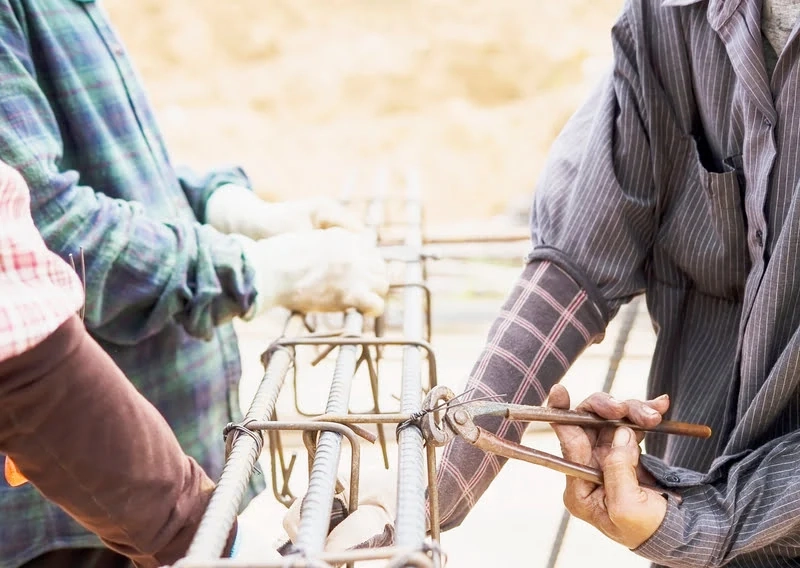
How Is Wire Mesh Installation Done?
Wire mesh installation is one of the most preferred methods to ensure the security of areas such as plots, fields, factory surroundings, sports fields, and gardens. Standing out with both its economical nature and durability, wire mesh systems can be used smoothly for many years with proper installation. So, how is wire mesh installation done? Here is a step-by-step wire mesh installation guide…
What Is Wire Mesh Installation?
Wire mesh installation is the process of fixing galvanized or PVC-coated steel wires to the ground with the help of posts. This system is used in both private properties and industrial areas to increase security and define boundaries.
How Is Wire Mesh Installation Done? Step-by-Step Guide
-
Determining and Preparing the Installation Area
First, the boundaries of the area where the wire mesh will be installed must be clearly determined. Installation planning is carried out by considering the land slope, ground structure, and length. Wild weeds are cleaned, and stones and debris are removed. -
Measuring and Digging Post Intervals
As standard, a distance of 2.5 – 3 meters is left between posts. Holes 30-50 cm deep are dug at the determined points. It is recommended to prepare a stronger foundation for corner and gate points. -
Installing the Posts
Galvanized pipe posts or concrete posts are placed into the holes and fixed with ready-mix concrete. The alignment of the posts is checked with a spirit level. The posts must be stabilized until the concrete dries. -
Stretching the Tension Wire
Tension wires are stretched through the upper, middle, and lower parts. These wires serve as a frame for the mesh wire. The tensioning process is done with the help of pliers and a reel. -
Installing the Wire Mesh
The wire mesh is unrolled in roll form onto the prepared frame and fixed. The mesh is attached to the posts using clips, wire, or special connection apparatus. Tension is very important; it should not be left loose. -
Installation of Gates and Special Passage Points
If any, gate systems are installed at this stage. Hinges, locking systems, and support posts are carefully placed.
Points to Consider in Wire Mesh Installation
Attention should be paid to ensuring that the posts sit firmly on solid ground.
Quality wire and connection elements should be used.
PVC-coated wires provide long life and resistance against rust.
Tension wires must be firmly and properly stretched.
Working with professional teams increases both workmanship quality and service life.
Why Deniz Tel Örgü?
As Deniz Tel Örgü, we offer quality materials and professional installation services in wire mesh systems with the experience of many years and our expert team. Whether it is a small garden or a large factory surrounding, we develop solutions specific to every need.
Contact us now to receive a site inspection and price quotation!
Conclusion
Wire mesh installation is a very solid and long-lasting security solution when the correct steps are followed. The quality of the materials to be used is as important as the installation process. Having the application carried out by a professional team prevents problems that may occur in the future.
Deniz Tel Örgü is always by your side for more information and support about wire mesh installation!
Send a Message