


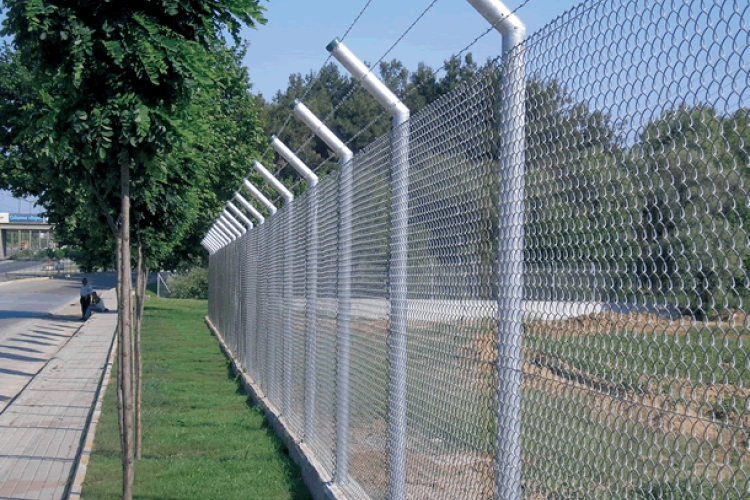
Materials for 100 Metres of Chain-Link Fencing: A Planning List
A materials plan for 100 metres of fencing needs more than 100 metres of mesh. Posts, end and corner supports, tensioning, fittings, gates and groundwork belong in the same plan. Exact quantities depend on layout, height and the selected system. These straight-run examples explain arithmetic, not a universal post spacing or a finished design for your site in Ankara.
Separate net length from purchased rolls
State whether 100 metres is the gross boundary or the mesh length after gate deductions. Missing or duplicate deductions create errors. Confirm the supplier’s net roll length. If a net 100 metre run and net 25 metre rolls are assumed, the arithmetic gives four rolls before cuts, joins and unusable offcuts. Specify the same height, opening, steel diameter and coating for each roll.
Show assumptions behind post quantities
As a mathematical example only, dividing a straight 100 metre line into 2.5 metre bays gives 40 bays and 41 post positions including both ends. This is not installation advice. Corners, gates, ground and product design may require another layout. Number posts on a sketch to avoid counting shared corners twice, and distinguish line posts from end, tension and gate posts.
Include tensioning and connecting parts
Line wire, tying wire, tensioners and end fittings must suit the installation method. Three specified uninterrupted tension lines over 100 metres would total 300 metres before fastening and turning allowances. That does not establish three lines as necessary or sufficient everywhere. Match fitting quantities to the actual posts and mesh; incompatible clips can prevent an otherwise correct mesh order from being properly completed.
List foundations and gates separately
Buried posts and posts fixed to existing concrete need different components. Foundation sizes, concrete quantities and anchors cannot be derived from fence length alone. Assess ground and underground services. List gate opening, posts, hinges, lock and connections separately. Include old-fence removal, waste and access equipment where applicable so that costs outside mesh and posts are understood before work starts.
Use one schedule for ordering and delivery
For every item show description, unit, quantity and included work. Confirm roll net lengths, post dimensions and compatible fitting codes. Mark delivery, taxes and labour as included or excluded. At delivery compare labels and products with the same schedule, reporting damage or shortages before installation. Agree how revised quantities will be priced and how surplus materials will be handled.
| Arithmetic example only | Assumption | Result |
|---|---|---|
| Mesh rolls | 100 m net / 25 m net rolls | 4 rolls before allowances |
| Post positions | 2.5 m bays, straight line | 40 bays, 41 positions |
| Tension line length | Three straight 100 m lines | 300 m before connections |
Example decision brief
Receiving four rolls in the example does not complete the entire materials list. Count separately ordered end parts, fittings and gate components too. A missing small item may delay installation. Check codes during unloading and report shortages before work; actual roll quantities must still follow confirmed lengths, cuts and product sizes.
Next step for your project
Apply these checks to your actual site in Ankara. Review the linked product descriptions and related article, then share measurements and photographs through the contact page to clarify scope. Confirm final dimensions and included work in writing before treating an estimate as an order.
Source and scope
Manufacturer documentation provides technical context; another product’s dimensions, warranty or installation values do not automatically apply to your project.
Send a Message